A useful question can carry an unnecessary document
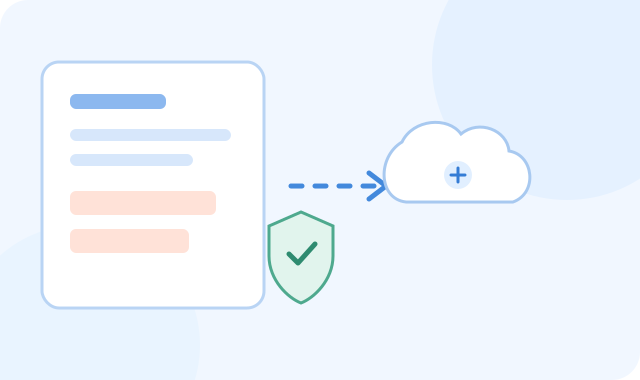
Imagine asking an AI assistant to summarize the tax issues in a client file. The answer may need transaction dates, amounts and a few clauses. The file may also contain the client’s name, home address, taxpayer number, bank details, employee records and signatures. Uploading the whole file gives the service all of that information for a task that may need only a small part of it.
Privacy mattered before generative AI. What changed is the speed and ease of copying whole documents into another system. A person who would hesitate before emailing a confidential folder may drag the same folder into a chatbot because it feels like a private conversation. An AI prompt is still a data-handling decision.
Why AI raises the stakes for privacy
The recipient changes
Once a document is uploaded, a provider processes it under a particular account, contract and set of settings. Storage, access, retention, subcontractors and model-improvement terms vary by service and plan. “The AI” is not one destination with one privacy policy. Know which service receives the file and whether its terms fit promises made to the customer or employee.
The volume changes
AI makes it tempting to upload a contract bundle, medical packet or payroll export instead of the two pages needed for the question. One file can describe many people besides the person who asked for help: dependants, witnesses, patients, colleagues and customers. Authority to use a document for one purpose does not automatically authorize disclosing everyone’s information to a new provider.
The output can reveal the input
A generated summary can repeat a name, quote a secret clause or combine details that make someone identifiable. Removing the obvious name from the source does not settle this risk: an unusual job title, date, location and amount may identify a person together. Review the AI answer before it reaches its next reader.
What people often overlook before uploading customer documents
- Permission for a new use. A client supplied a document for a service. That does not automatically authorize sending it to any AI account.
- Information the task never needed. A summary may require an invoice total but not the payer’s account number, or a clinical trend but not a patient record ID.
- Other people in the file. Attachments, email threads, comments and tables can expose people outside the immediate request.
- Provider terms. Consumer and organizational accounts may have different retention, access and data-use arrangements. Check the actual service and plan.
- Information outside the visible page. PDF comments, metadata, attachments or hidden layers may contain sensitive material. A black box on a page does not prove the underlying content is gone.
- Copies after the upload. Prompts, outputs, downloads and shared conversations may create further copies with their own access and retention questions.
These are questions to answer before sharing. A governed AI service and a carefully prepared input can be appropriate when the purpose and obligations allow it.
Which laws can be at risk?
The rule depends on the people, the organization, the information and the provider arrangement. Uploading a document does not automatically break a law. These examples show why “we only asked for a summary” is not enough of a compliance check.
European Union and EEA: GDPR
Organizations subject to the GDPR need an appropriate legal basis and must limit personal data to what is necessary. A provider acting as a processor needs the required contractual arrangement; a transfer outside the EEA can require a separate transfer mechanism. Uploading a full customer record to an unapproved service may conflict with those duties. See the European Data Protection Board’s guide to data protection by default and its international-transfer guide.
United Kingdom: UK GDPR and Data Protection Act 2018
UK organizations must assess the purpose, minimize personal information and put the required terms in place when a provider processes data on their behalf. A transfer to a separate organization outside the UK may also trigger restricted-transfer rules. See the ICO’s processor-contract guidance and transfer guide.
United States: HIPAA for covered health information
HIPAA does not cover every US business document. For covered entities or business associates handling electronic protected health information, a cloud provider that creates, receives, maintains or transmits that information on their behalf is generally a business associate. HHS says a compliant business associate agreement and other HIPAA safeguards are required. Sending patient records to an unapproved tool can therefore create a serious issue. See HHS guidance on HIPAA and cloud computing.
Canada: PIPEDA where it applies
Canada’s PIPEDA requires covered private-sector organizations to follow principles such as accountability, identifying purposes, consent and limiting collection, use and disclosure. Provincial laws may also apply. See the Privacy Commissioner’s PIPEDA principles and generative-AI principles.
Australia: Privacy Act 1988 and Australian Privacy Principles
For entities covered by the Privacy Act, entering personal information into an AI product raises privacy-law questions, including when an output contains personal information. The Australian privacy regulator recommends avoiding personal information, especially sensitive information, in publicly available generative-AI tools as a matter of best practice. See the OAIC’s guidance on commercially available AI.
Sector rules, professional duties, client contracts and current provider terms can add obligations. Check the rules and agreements that apply to the actual document and destination.
A better way to prepare an AI request
- Define the job. Identify the question and the facts needed to answer it.
- Confirm the destination. Check whether the service, account, contract and purpose are approved.
- Use the smallest useful input. Extract the needed passage or work from a separate copy. Keep useful figures and clauses; remove unnecessary names, IDs and account details.
- Review the copy. Correct missed or mistaken findings, check repeated occurrences and inspect the saved file.
- Review the answer. Check that the AI output does not disclose information that should not reach its next reader.
Replacing a name with a stable token such as PERSON_1 can preserve useful relationships in the text. It does not automatically make the document anonymous; other facts may still identify a person.
Conclusion: give the AI the answerable part
The useful question is “Which parts of this file may this approved service and its next reader receive?” Local redaction can help prepare a smaller, reviewed copy before an upload. It cannot grant permission for the upload or guarantee that every sensitive clue was removed. Make the sharing decision deliberately, then check what was actually sent.